Gas Line Repair & Inspection in Rosedale, Queens
Certified black steel gas pipe installations, precision pressure decay testing, gas stove hookups, leak troubleshooting, and NYC code compliance inspections across Rosedale.
If You Smell Natural Gas: Evacuate Immediately
If you smell gas, leave the building immediately. Once outside, call 911 or the gas utility's emergency number. Do not operate electrical switches, use open flames, or attempt to locate the leak.
- Do Not Flip Switches: Never turn on/off light switches, garage door openers, or battery devices inside the home.
- Call from Outdoors: Dial 911 and National Grid from across the street or a safe outdoor location.
- Never DIY Gas Work: Regulated gas piping must strictly be diagnosed and serviced by licensed plumbing professionals.
Precision Gas Piping Diagnostics in Rosedale
Natural gas supplies the fuel required to fire residential boilers, domestic water heaters, kitchen ranges, and clothes dryers throughout Rosedale. While natural gas is an efficient energy source, aged black steel piping, corroded threaded unions, and oxidized shutoff valves require meticulous professional care. In damp Queens basements, external pipe rust can thin pipe walls over time, creating pinhole leaks at threaded joints.
Homeowners and multi-family building owners rely on NY Plumbing for gas line repair Rosedale Queens when needing:
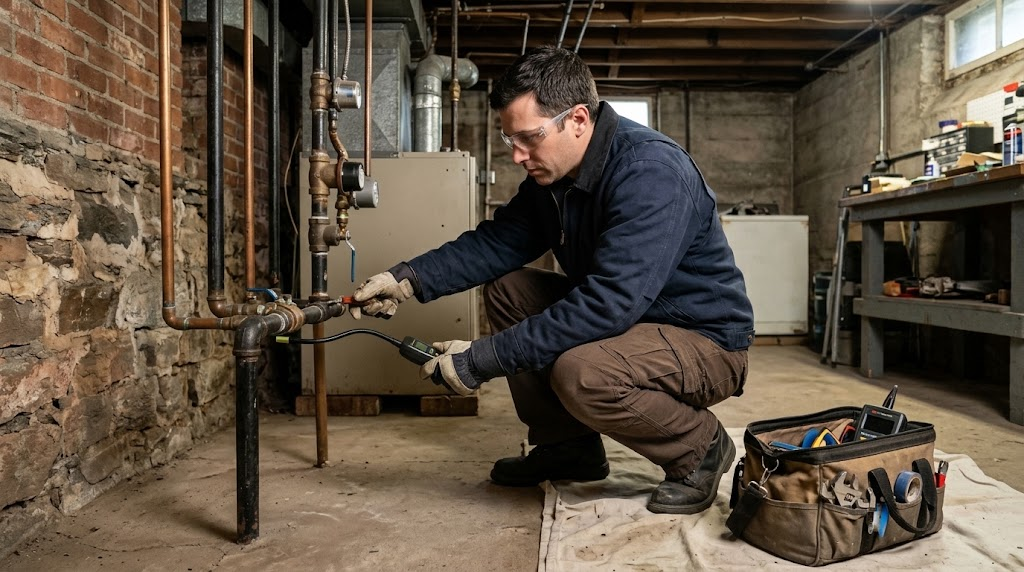
- Gas Piping Inspection Rosedale Queens: Conducting non-destructive electronic combustible gas sniffing audits and bubble leak tests along basement gas headers.
- Gas Line Installation for Stove Rosedale Queens: Running dedicated Schedule 40 black iron gas pipe and brass isolation shutoffs for new kitchen ranges or dryers.
- Pressure Decay Testing: Pumping piping networks with compressed air and monitoring calibrated digital gauges to certify zero leakage.
- National Grid Meter Unlocks: Completing certified plumbing repairs, DOB filings, and utility pressure tests required to restore gas service after an emergency utility shutoff.
NYC Local Law 152 Periodic Gas Inspections
Under NYC Local Law 152, covered buildings across New York City—including multi-family apartment properties, mixed-use buildings, and specific residential classifications—must undergo periodic gas piping system inspections once every four years by a licensed master plumber. We inspect exposed gas lines from the utility point of entry to appliance shutoffs, identify illegal connections or corrosion, and file required GPS-1 certification forms with the NYC Department of Buildings.
NYC DOB Fuel Gas Code Rules
All residential gas piping work must comply with strict municipal regulations:
- Approved Piping Materials: NYC code mandates threaded Schedule 40 black steel pipe with malleable iron fittings; unapproved copper or thin-wall tubing is strictly prohibited.
- Individual Appliance Valves: Every gas appliance must possess its own full-port brass quarter-turn shutoff valve located within six feet of the equipment in the same room.
- DOB Permit Filings: Modifying or extending gas lines requires formal plumbing work filings and official DOB sign-offs.
What to Note for Non-Emergency Gas Service
When scheduling routine gas appliance hookups or system inspections:
- Identify the total BTU ratings of all connected appliances (boiler, water heater, stove).
- Ensure basement gas piping headers are easily accessible and unobstructed.
- Check if you have received a formal Local Law 152 inspection notice from the city.
1. Electronic Gas Sniffing Audit
We trace all exposed basement gas mains using calibrated electronic combustible gas sensors capable of pinpointing microscopic methane leaks at threaded couplings.
2. Pipe Threading & Assembly
Damaged pipe segments are excised and replaced with heavy black steel pipe threaded on-site, sealed with gas-rated thread compound, and supported with code hangers.
3. Certified Pressure Decay Test
The system is pressurized with compressed air to meet DOB requirements. We verify that test gauges hold steady pressure with zero decay over the entire inspection duration.
Frequently Asked Questions About Gas Line Repair
If you smell the distinctive rotten-egg odor of natural gas, evacuate everyone from the building immediately. Do not flip light switches, do not unplug appliances, do not light matches, and do not use landline or cell phones inside. Once safely outdoors at a distance, call 911 and the National Grid emergency response hotline.
A qualified plumber isolates all gas appliances, disconnects meter connections, and pumps the gas piping system with compressed air using a calibrated test gauge. The system must hold pressure without any measurable decay over a specified duration to prove zero gas leakage before fuel is restored.
NYC Local Law 152 requires periodic inspection of exposed gas piping in covered buildings (generally multi-family properties classified in occupancy groups such as R-2) once every four years by a licensed master plumber, with specific reporting submitted to the NYC Department of Buildings.
Corrugated stainless steel appliance connectors behind kitchen stoves or clothes dryers can become brittle, kinked, or corroded over time due to appliance vibration and household cleaning chemicals. Replacing worn connectors with certified commercial lines ensures leak-free safety.
Related Heating Services & Neighborhood Information
Explore closely related heating services or return to our primary diagnostics page:
- Boiler Repair in Rosedale: Troubleshoot gas boiler burners, electronic igniters, and safety limit circuits.
- Water Heater Repair: Service gas water heater control valves, thermocouples, and pilot burners.
- Boiler Replacement: Upgrade your heating plant and coordinate gas service line sizing with National Grid.
- Areas We Serve in and Around Rosedale: View local coverage across Laurelton, Springfield Gardens, and Valley Stream.